
3 Costly Mistakes During a Condominium Pool Renovation

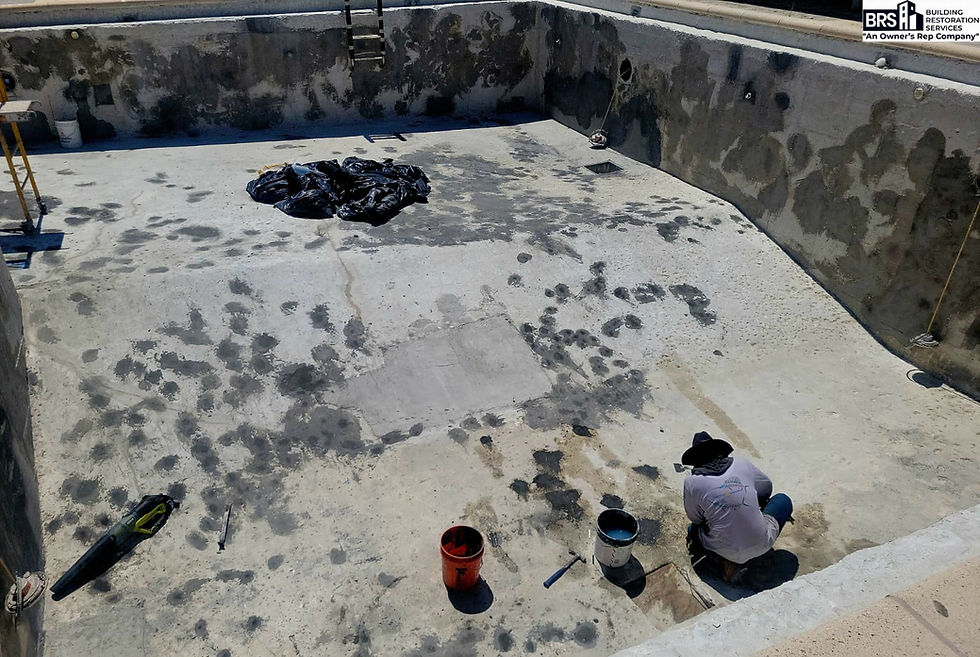
A condominium pool renovation rarely goes over budget because of tile selections or finish colors.
It usually goes over budget because of what nobody looked at before demolition started.
Hidden plumbing leaks, missing electrical bonding, improper waterproofing systems, and material substitutions have turned countless pool renovation projects into expensive lessons for condominium associations across South Florida.
The good news?
Most of these problems are completely avoidable.
Here are the three mistakes we see most often during condominium pool renovations.
1. Condominium Pool Renovation Mistake #1: Starting Construction Before Understanding What's Underground.
Nothing destroys a project budget faster than discovering major problems after demolition has already started.
Unfortunately, this happens more often than most boards realize.
Hidden Plumbing Leaks
A pool can operate for years while losing water through underground piping without anyone noticing the true extent of the problem.
Then demolition begins.
The contractor removes the existing finish, pressure testing is finally performed, and suddenly the project team discovers leaking return lines, suction piping, skimmer connections, or main drain lines.
At that point there are only two options:
Ignore the problem and risk future failures.
Stop construction and repair the underground piping.
Neither option is inexpensive.
What could have been identified during preconstruction now becomes a change order, additional demolition, schedule extensions, and frustrated residents.
A pressure test performed before construction starts is often one of the highest-return investments a condominium association can make.
The Electrical Bonding Surprise
Another common discovery during pool renovations is finding out that the existing pool does not comply with current electrical bonding requirements.
For older South Florida communities, this is not unusual.
Corroded bonding conductors, incomplete equipotential grids, or missing bonding connections on handrails, ladders, light niches, or metallic equipment are discovered only after construction is already underway.
Suddenly the project requires:
Additional demolition.
New copper bonding conductors.
Additional inspections.
Permit revisions.
Additional costs that were never included in the original budget.
The reality is simple:
Finding these issues before demolition is inconvenient.
Finding them during construction is expensive.
2. Choosing the Cheapest Waterproofing System Instead of the Right One
Not all waterproofing systems are created equal.
Yet many condominium associations still make one critical decision based on a single number:
Price.
One of the most common examples is replacing the engineer's recommended waterproofing system with a lower-cost cementitious waterproofing product simply because it reduces the initial construction cost.
The problem?
The least expensive waterproofing system on bid day often becomes the most expensive system five years later.
Depending on the structure, movement conditions, exposure, and project requirements, the Engineer of Record may recommend higher-performance waterproofing systems specifically designed to accommodate cracking, movement, and long-term exposure to pool chemicals.
Ignoring those recommendations can lead to:
Premature leaks.
Water intrusion into adjacent spaces.
Concrete deterioration.
Reinforcing steel corrosion.
Future repair projects that nobody planned for.
But There Is Another Problem Most Associations Never See
Even when the correct material is approved, there is no guarantee that the same material is actually installed.
During construction it is not uncommon to discover:
Unapproved product substitutions.
Fewer waterproofing coats than specified.
Reduced material thickness.
Failure to comply with manufacturer curing requirements.
Use different material for surface preparation.
The submittal may say one thing.
The jobsite may tell a very different story.
This is why field verification and quality control inspections are just as important as the original material selection.
Because the waterproofing system that protects your structure is the one installed in the field — not the one approved on paper.
3. Assuming Contractors Will Coordinate Everything Themselves
Pool renovations involve far more than a pool contractor.
Structural engineers, electricians, plumbers, waterproofing installers, tile contractors, inspectors, manufacturers, and consultants all need to work in the correct sequence.
Without active coordination, projects quickly run into problems:
Waterproofing installed before inspections occur.
Electrical work conflicting with new finishes.
Plumbing modifications discovered after tile installation.
Contractors waiting on approvals while schedules slip.
Every day lost on coordination becomes another day added to the project schedule.
Successful pool renovations are rarely the result of luck.
They are the result of planning, oversight, and constant communication between every party involved.
Final Thoughts
Most condominium pool renovations do not fail because of poor workmanship.
They fail because critical decisions were made without complete information, hidden conditions were discovered too late, or nobody was responsible for connecting all the moving pieces of the project.
A leaking underground pipe discovered after new finishes are installed.
An electrical bonding deficiency identified halfway through construction.
A waterproofing product installed in the field that does not match the approved submittal.
These issues are far more common than most associations realize, and they are often responsible for the largest budget overruns and schedule delays.
This is where an Owner Representative can provide significant value.
An experienced Owner Representative works exclusively in the best interest of the Association, coordinating engineers, contractors, consultants, and inspectors while ensuring that the project scope, budget, schedule, and quality standards remain aligned throughout construction.
From reviewing preconstruction investigations and verifying submittals to monitoring field installations and identifying potential issues before they become costly change orders, proactive oversight can significantly reduce project risk.
Because in condominium construction, success is rarely determined by how problems are solved during construction.
It is determined by how many problems are prevented before construction ever begins.


Comments